Standard vs Custom Slip Rings: An OEM Decision Guide
Compare standard slip rings, platform modifications and custom engineering. Learn which design gaps OEM engineers should resolve before requesting a quote.
2026-09-14 14:00 by admin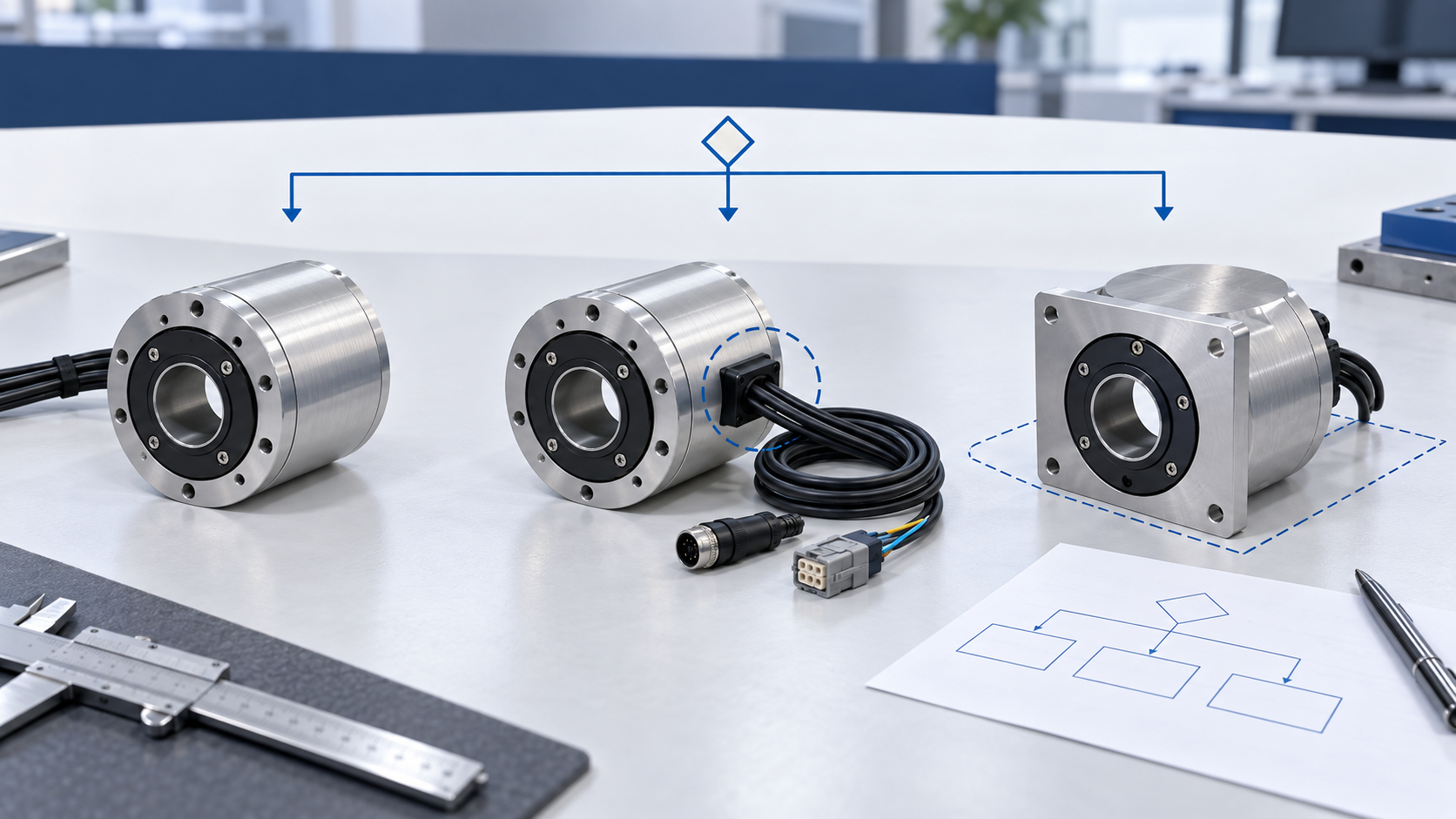
- Share
-

-

-

-

-

Choose a standard slip ring when a documented configuration meets your machine's requirements together. Adapt an existing platform when the remaining differences can be accommodated through confirmed changes. Request custom engineering when essential constraints cannot be satisfied by either route. For OEM mechanical engineers comparing standard vs custom slip rings, the useful question is how much of an existing design can be retained while meeting the application requirements.
Standard, Modified, or Fully Custom: Compare the Three Paths
The choice between standard and custom slip rings depends on the gap between an available configuration and the machine's requirements. Start with the closest documented option, identify the differences, and assess whether those differences require interface adjustments or a broader design review. The three paths below are this article's engineering decision framework, not official JINPAT product tiers.
| Decision path | When to consider it | What needs confirmation |
|---|---|---|
| Existing standard configuration | One documented configuration satisfies all essential requirements | The selected configuration, installation interfaces and operating conditions match the application |
| Existing platform with limited customization | The platform appears suitable, but defined interfaces or options need adjustment | The manufacturer accepts the changes and identifies their effect on performance and verification |
| Fully custom engineering review | Essential requirements remain incompatible with available configurations and permitted changes | Feasibility, design scope, trade-offs and acceptance criteria need evaluation |
Here, “standard” describes a documented configuration; it does not mean stock is available. Likewise, a catalog entry does not establish price or delivery timing. Compare quotations for the actual configuration and agreed scope, rather than assigning commercial advantages to a label.
When an Existing Slip Ring Configuration Is Enough
An existing slip ring configuration is enough when its electrical arrangement, signal capability, mechanical fit and operating limits meet the application together. OEM engineers should check a specific configuration rather than infer suitability from a series name. A requirement such as Ethernet transmission or high current is a reason to inspect relevant catalog options, not automatically to commission a new design.
JINPAT's through-bore selection guide identifies the LPT standard through-bore series. Its Ethernet capsule selection guide also lists existing configurations combining Ethernet and power. The LPA high-current catalog provides another established product direction. These examples make catalog review a practical starting point, including for requirements beyond basic power transmission.
The decisive check is simultaneous fit. A suitable bore alone does not resolve an incompatible circuit arrangement; a listed signal option does not establish that the same configuration meets the available installation space. Have mechanical and electrical reviewers assess the same candidate and revision before accepting the standard route.
When to Adapt an Existing Platform
Adapting an existing slip ring platform is appropriate when the core configuration appears to fit and the remaining differences are clearly defined. Cable exits, lead lengths or connector choices are useful starting points for discussion. A change qualifies as limited customization only after the manufacturer confirms its scope and effect; an apparently small external change can still require engineering review.
The LPT selection guide describes standardized accessories and modular customization, including lead-out positions and lead lengths. The Ethernet capsule guide lists connector types among customizable items. Such options support asking what can be retained from an existing platform before requesting an entirely new arrangement. They are not default features of every catalog entry.
Separate Interface Changes from Performance Changes
Create a short change list with two columns: the requested difference and the requirement that must remain satisfied. Keep interface requests separate from changes to current, voltage, signal transmission or operating conditions, while asking the supplier to assess interactions.
For example, a connector request is not merely a naming preference if its electrical or mechanical suitability remains unconfirmed. Agree which characteristics remain unchanged and which need further verification. “Same platform” should never substitute for approval of the revised configuration.
When the Design Needs a Custom Engineering Review
A custom engineering review is warranted when essential requirements cannot be met together by an existing configuration or confirmed platform changes. The trigger is the unresolved combination of constraints, rather than any single feature sounding unusual. OEM engineers should identify the non-negotiable requirements and ask whether a feasible design exists before treating full customization as the selected solution.
Look for Constraints That Cannot Be Met Together
Consider a machine that needs a fixed through-bore, a restricted external envelope and a particular power-and-signal arrangement. If no documented candidate meets the combination, increasing customization scope may be necessary. First establish whether an equipment-side constraint can change without compromising the machine's requirements.
JINPAT materials describe Ethernet, CANBUS and EtherCAT options, while its collected product manual includes pneumatic-electric, electric-optical and high-speed product directions. The LPA catalog also identifies customizable circuit configurations and operating requirements. These capabilities provide subjects for a technical discussion; they do not prove that every feature or maximum rating can coexist in one assembly.
A custom review should therefore produce a feasibility assessment and defined trade-offs. The outcome may be a proposed configuration, revised equipment requirements or a conclusion that the requested combination is unsuitable. Customization is not a guarantee that all constraints can be preserved.
Use a Short Decision Flow to Avoid Unnecessary Customization
To avoid unnecessary slip ring customization, separate fixed machine requirements from preferences before selecting a design route. Compare a documented candidate against the fixed requirements, then review only the remaining differences. Move toward full custom engineering when confirmed platform options cannot close those gaps, rather than starting with a custom specification by default.
Define the fixed boundaries. Identify requirements the machine cannot relax and preferences that remain negotiable.
Select a documented candidate. Review one configuration against the combined requirements, with mechanical and electrical input.
If it fits, confirm the existing configuration. Resolve installation and operating assumptions before selection.
If gaps remain, assess platform changes. Ask which changes are supported and what must be verified again.
If essential gaps remain unresolved, request custom review. State the conflicting requirements and any flexibility in the machine design.
As a hypothetical engineering example, an OEM rotary assembly could fit an existing Ethernet-and-power configuration except for the cable exit and connector arrangement. The next step would be a platform-change review. If that review instead finds that the required interfaces cannot fit within the fixed installation envelope, the OEM would need to revisit the envelope or request broader custom engineering. This is an illustrative decision scenario, not a customer case.
Before RFQ, Confirm the Gaps That Matter
Before requesting a quotation, OEM engineers should summarize the closest candidate, the requirements it does not meet and the boundaries that cannot change. That gap statement helps the supplier assess whether an existing configuration, a platform adjustment or custom engineering deserves further work. It supplements the full specification package rather than replacing the information needed to evaluate and quote a solution.
Keep the initial decision brief focused: name the candidate configuration, explain the unresolved differences and identify any acceptable alternatives. Ask the supplier to respond with the proposed route and its assumptions, so procurement compares equivalent scopes.
For the complete technical and commercial preparation, use the slip ring specification checklist for OEM RFQs. Bring the gap statement into your discussion with JINPAT to assess the appropriate next step.